
Editorial policy
How We Write, Source and Update Our Guides
Every guide on this site is written or reviewed by Eskander Gerges, Chartered Accountant, at our office in Sharm El Sheikh. This editorial policy explains where our figures come from, how often we re-check them, how corrections are logged and which detail we keep for a personal consultation.
- Official sources first
- Dated and re-checked
- Arabic, English, Italian, Russian
01Authorship
Who writes and reviews our guides
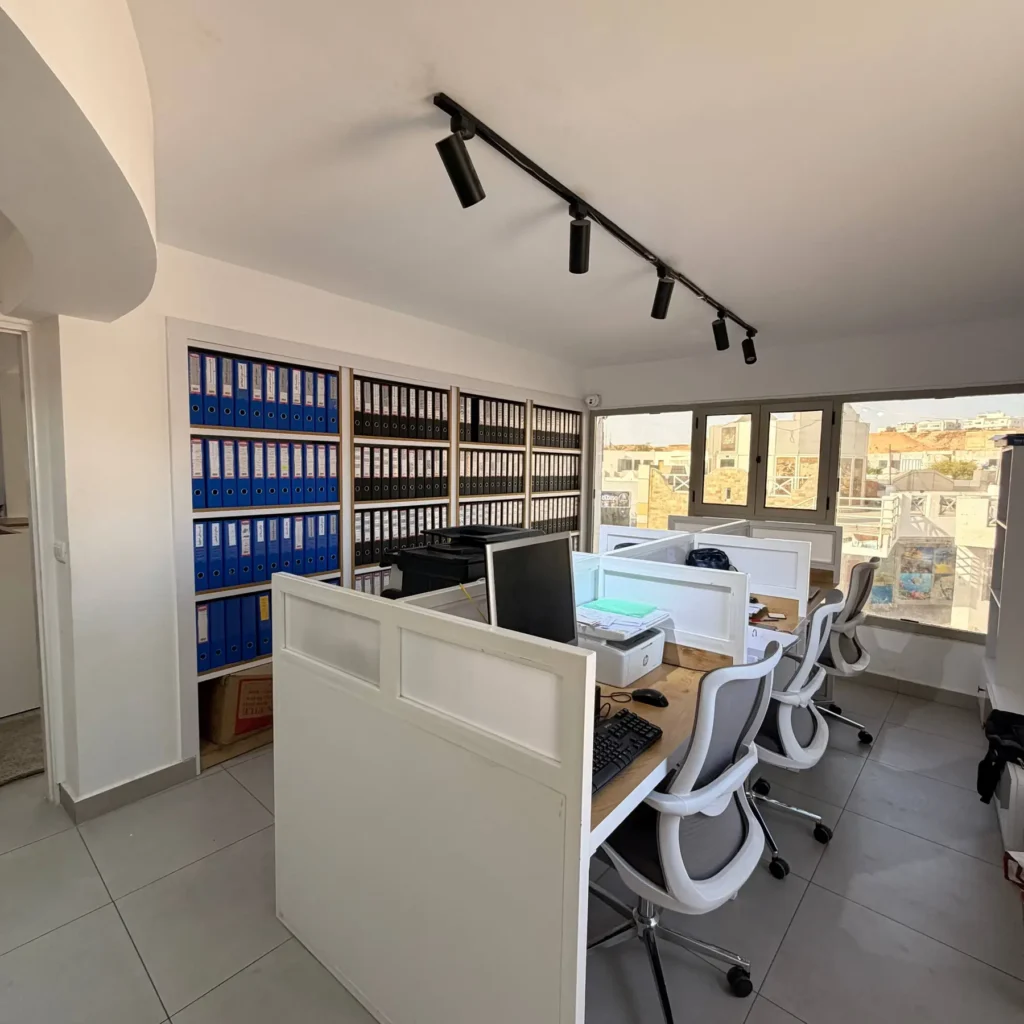
Eskander Gerges, Chartered Accountant (محاسب قانوني) and tax expert, writes or reviews every guide, service page and FAQ answer here, from Office 314, Al Azizia Mall, Ras Kennedy. His name, the date of the last review and the numbered sources appear at the foot of each guide, and you can read his profile and credentials before you rely on anything we publish.
Reviewing is not proofreading. Before a page goes live, every number, rate, date and deadline in it is traced to a line in our fact sheet, which records the official source and the day it was last checked. A figure that cannot be traced comes out, however useful it looks. We do not guess at government fees, and we do not copy a figure from another site without going back to its source.
Property, Sinai and residency topics raise legal questions as well as tax ones. If a lawyer has reviewed the legal points of a page, the page says so and names the lawyer. If not, we checked those points ourselves against the sources listed, and you should read them as an accountant's summary, not a legal opinion.
The site is published in Arabic, English, Italian and Russian. Each version is written natively from the same fact sheet rather than translated line by line. The explanations differ, because an Italian pensioner and an Egyptian café owner ask different questions. The rates, dates and deadlines do not.
02Sources
Our source hierarchy: the law text comes first
When two sources disagree, the higher one wins. This is the order we work in:
| Rank | Source | What we take from it |
|---|---|---|
| 1 | The Official Gazette (الجريدة الرسمية): laws, presidential decrees and prime-ministerial decrees | The rule itself. We cite its number and the date it took effect, for example Presidential Decree 128/2022 on Sharm El Sheikh, Dahab and the Gulf of Aqaba tourism sector, in force since 1 April 2022. |
| 2 | Official pages and documents of the authorities: the Egyptian Tax Authority (ETA), GAFI, the Ministry of Tourism (MoTA), the Chamber of Diving and Watersports (CDWS), the Ministry of Health and Population (MOHP) | How the rule is applied: forms, official fees, hotlines, filing deadlines. If an authority's page shows something we cannot find in the law, we report it as what the page shows, with the date we saw it: "shown on the Ministry of Tourism site on 10 October 2026". |
| 3 | Big 4 firms, law firms and legal guides: PwC Worldwide Tax Summaries, Deloitte, Baker McKenzie, Chambers | Cross-checks and context. Useful, but never a substitute for the text. |
| 4 | The press: Ahram Online and the Arabic-language dailies | Early news of a change. We label it "reported" and replace it with the official text once that is published. |
In practice:
- No source, no number. If a figure cannot be traced to one of these sources, it does not appear. Our own fees are not on the site either; we quote them case by case.
- If sources conflict and we cannot settle it, we leave the figure out and say why. The property values that set the length of residence through property ownership are quoted differently from one source to the next, so our residency pages give no figures and say that the authorities confirm the current tiers at application.
- Every rule carries an "as of" date. The current fact sheet was checked against its sources on 10 October 2026.
03Updates
Review cycle: quarterly for tax, and on every new tax law
Egyptian tax rules moved quickly in 2025 and 2026, with a facilitation package in each year. That is why every guide shows the date it was last reviewed, and why the review cycle is fixed:
- Tax and residency guides are re-checked at least every three months.
- Other guides and service pages (company formation, licensing, sectors) are re-checked at least every six months.
- When a new tax law appears in the Official Gazette, every page it touches is re-checked straight away, without waiting for the scheduled date. Laws 148–153/2026 were published on 28 July 2026 and took effect the next day, with a correction on 8 August 2026. Among other things they changed the rules on tax cards, dividend tax, property disposals, bookkeeping and dispute settlement, so every page on those subjects is checked against them.
- Rules with an end date get a reminder. As of October 2026, tax-dispute settlement under Law 152/2026 is open until 31 December 2026, so each page that mentions it is re-checked in January 2027. The Investment Law Article 11 special-incentive window for new companies has a closing date of 28 October 2026, and pages that mention it are updated once that date passes.
- Closed windows are marked as closed, not deleted, because readers still arrive from old links and search results. The discounted 2026 built-property tax returns, for example, closed on 30 September 2026.
The "Last reviewed" date at the foot of a page means the whole page was checked against its sources on that day. We do not move it for a typo.
04Corrections
Corrections log: what changed, and when
We separate three kinds of change, because you should know which one happened:
| Type | What it means | What you will see on the page |
|---|---|---|
| Correction | We got a fact wrong. | A dated note saying what the page said before and what it says now. |
| Update | The law or the authority's practice changed. | The new rule with its "as of" date. The old rule stays on the page where it still applies, for example to earlier tax years. |
| Clarification | The fact was right, but the wording could mislead. | Clearer wording. No correction note, because no fact changed. |
Corrections and updates also go into the "What changed" log on our dated guides to tax and business in Egypt, newest first, so you can see in one place what moved and when. We never overwrite a mistake without saying so.
If you think something here is wrong or out of date, send us the page and the source you are looking at. We check your point against the official text and, if we got it wrong, correct the page and log the change.
05The consultation rule
Why some details are held back for a consultation
The rule is this: every guide fully answers the question it was written for and holds back exactly one case-specific element. That element is named in a box headed "What we don't publish" and offered on WhatsApp.
The rules themselves are all on the page, with their sources. What we keep for a conversation is the step that changes with your documents: your nationality, your activity, how the shares are split, where your premises or plot sit in South Sinai, your turnover history. A general answer to that kind of question is how people end up with the wrong company form, or with a contract the authorities will not approve.
Examples of what a guide holds back:
- the approval route for a particular share transfer or property contract in Sinai;
- whether the simplified regime under Law 6/2025, with its five-year lock-in, suits your business;
- how a specific Sharm usufruct unit is treated when you apply for residence;
- the exact document list for your nationality and activity.
06AI use
How we use AI: drafted with tools, checked by a person
We use AI writing tools, and we would rather say so than leave you guessing. They help with drafting, structure and the four language versions. They do not decide what is true.
- Facts come from the fact sheet, not from the tool. Every number, date and deadline has to match a line on the sheet, with its official source, and anything a tool adds that is not on the sheet is removed.
- A person signs off every page. Eskander Gerges reviews each page before it is published, and each language version is checked against the same fact sheet. Nothing goes live straight from a tool.
- Guides are written from public sources only: laws, official pages and published commentary. No client file, name or figure goes into them.
- Nothing is invented: no made-up case studies, testimonials, client numbers or "typical" savings. Where a page shows a worked example, it is labelled as an illustration built from the published rules.
07Disclaimer
What our guides are, and what they are not
Our guides explain Egyptian rules as they stood on the date shown on each page. They are general information, not advice on your situation, and reading them does not make you our client.
- Rules change, sometimes with little notice and sometimes with retroactive effect. Check the "as of" date on any rule, and the official source we link, before you rely on it.
- Practice can differ from the text, and practice in Sharm El Sheikh can differ from practice in Cairo. Where we know of a difference we say so, but we cannot promise there is none.
- Official fees and thresholds are quoted from a dated source. Nothing on this site is a quote for our services, a calculation of your tax or a promise about an outcome or a timeline. Our tools work from the same dated rules, and their results are indications only.
- Before you sign a contract, transfer money or file with an authority, get advice on your own case, from us or from another qualified professional.
Corrections
Spotted an outdated fact? Tell us on WhatsApp.
Send the page link and what you think has changed. We check it against the official source and reply the same day during office hours, 09:00–23:00 every day, in Arabic, English, Italian or Russian.